


Dentist in Dubai Blog
What a Sleep Apnea Dentist in Dubai Really Means
23
Sep
Sep
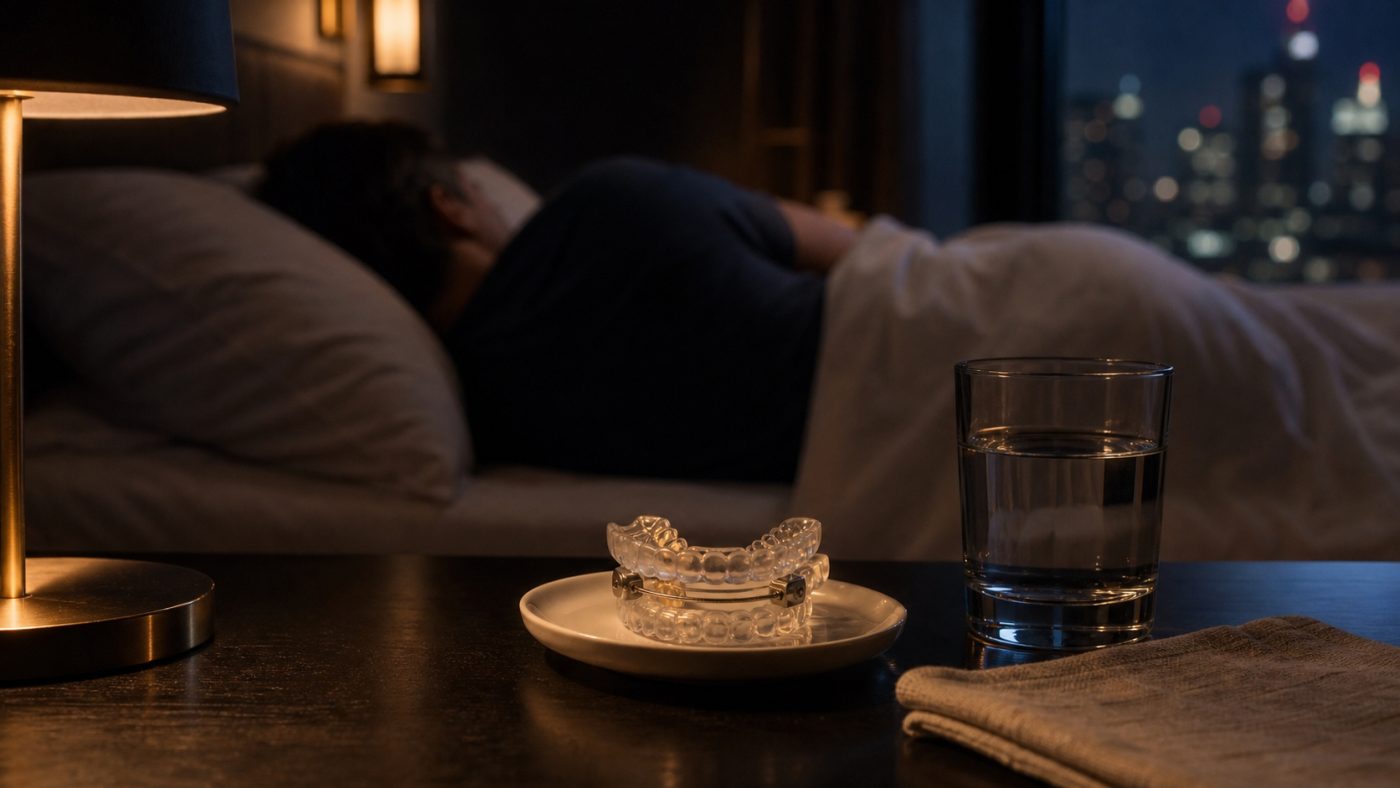
Sleep-disordered breathing covers a spectrum of conditions ranging from primary snoring to obstructive sleep apnea (OSA).
A proper diagnosis generally requires a medical sleep assessment and objective testing, such as a home sleep apnea test or an overnight laboratory sleep study when appropriate.
Dentists trained in dental sleep medicine can play an important role within this wider care pathway. They may identify oral and craniofacial features associated with sleep-disordered breathing, ask about symptoms, assess the teeth and jaw, evaluate whether an oral appliance could be appropriate, and work alongside sleep physicians and other healthcare professionals.
For selected adults, a custom mandibular advancement appliance may form part of the treatment plan. However, this should be professionally assessed, fitted, adjusted and monitored rather than treated as a generic anti-snoring mouthguard.
This distinction is particularly important when looking for a sleep apnea dentist in Dubai. Two people may both complain about snoring while having very different underlying causes, risk profiles and treatment requirements. The objective should therefore be to understand the reason for the symptoms first and then determine which treatment pathway is appropriate.
For general background on the condition, see Sleep apnea on Wikipedia. Wikipedia is useful for broad entity context, but it should not replace clinical assessment or professional guidance.
Could Your Symptoms Be Sleep Apnea?
Snoring is common. It can be disruptive for both the person snoring and their partner, but snoring does not automatically mean that someone has obstructive sleep apnea.
Sleep apnea occurs when the airway repeatedly narrows or closes during sleep, interrupting normal breathing and sleep architecture. These repeated interruptions can affect sleep quality and may contribute to problems during the daytime.
It may be sensible to seek further assessment if snoring occurs alongside symptoms such as:
- A partner noticing pauses in your breathing during sleep
- Waking while choking, gasping or snorting
- Feeling tired despite spending enough time in bed
- Falling asleep unintentionally during the daytime
- Waking with headaches
- Waking with a dry mouth
- Restless or frequently interrupted sleep
- Difficulty concentrating
- Irritability or changes in mood
- Poor daytime energy
- Loud or increasingly disruptive snoring
Dubai has established sleep-medicine services for diagnosing and managing conditions including sleep apnea. Dubai Health Sleep Medicine provides specialist information, while the Dubai Health Authority Standards for Sleep Laboratory set current regulatory standards for sleep-laboratory services under DHA jurisdiction.
If you are experiencing significant daytime sleepiness—particularly if you drive, operate machinery or work in a safety-sensitive occupation—it is important to seek appropriate medical advice.
What Can a Dentist Do for Sleep Apnea?
A dentist should not diagnose obstructive sleep apnea simply by examining your mouth. Sleep apnea is a medical sleep disorder and should be established through an appropriate clinical assessment and, where indicated, objective sleep testing.
However, a dentist with appropriate training in dental sleep medicine can play a significant role after or alongside that process.
A dental sleep medicine consultation may involve evaluating:
- Your teeth and gums
- Existing crowns, bridges, implants and restorations
- Tooth mobility or periodontal support
- Tooth wear
- Your bite and how the upper and lower teeth meet
- Your jaw joints
- Jaw-muscle function
- Range of jaw movement
- The position and characteristics of the tongue and palate
- Space available for an oral appliance
- Previous night guards, retainers or sleep appliances
- Any dental factors that could affect long-term appliance use
The purpose is not simply to determine whether an appliance can physically fit into your mouth. The more important question is whether a custom mandibular advancement appliance would be appropriate, comfortable and safe for your specific dental and sleep-health circumstances.
The examination may also identify dental conditions that should be addressed before oral appliance therapy begins, including active gum disease, unstable teeth, untreated decay, significant jaw-joint symptoms or an existing bite problem.
For an overview of the UAE service, visit Dr. Amini’s Snoring and Sleep Apnea Dubai treatment page.
You can also read more about Dr. Sara Amini’s Dubai credentials and professional background.
What Is a Mandibular Advancement Appliance?
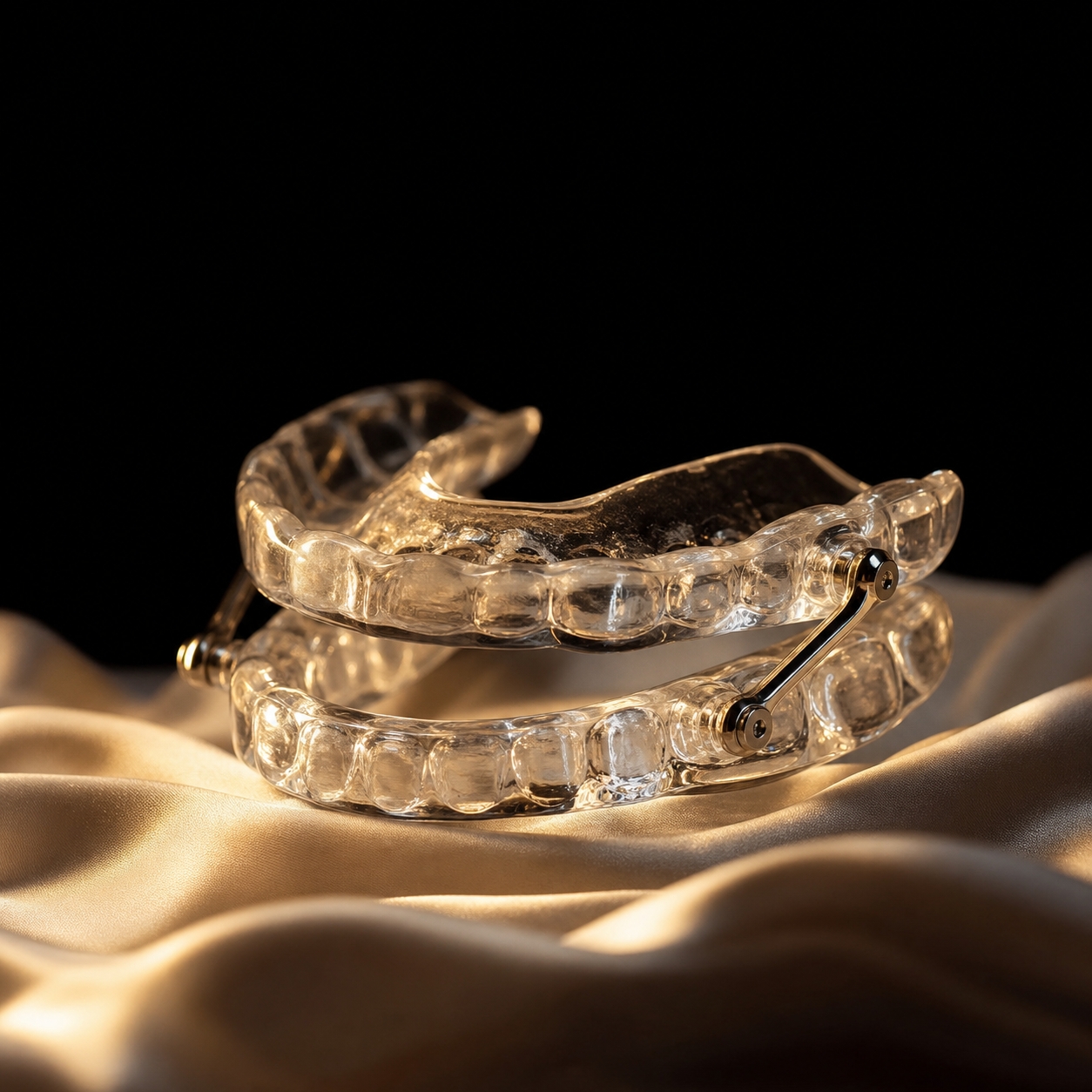
A mandibular advancement appliance is a custom-made dental device worn while sleeping. The appliance is designed to position the lower jaw slightly forward. In suitable patients, this can help reduce the tendency of the upper airway to narrow or collapse during sleep.
It is important to distinguish a mandibular advancement appliance from a conventional night guard. A standard night guard is generally designed to protect teeth from grinding or clenching. A mandibular advancement appliance has a different purpose: it is designed specifically to alter the position of the lower jaw during sleep and may be used in the management of primary snoring or diagnosed obstructive sleep apnea when clinically appropriate.
A professionally provided oral appliance should generally be:
- Custom-made for the individual patient
- Designed around the patient’s teeth and bite
- Adjustable where clinically appropriate
- Comfortable enough to support consistent use
- Reviewed periodically
- Monitored for changes in bite, teeth or jaw comfort
- Integrated into the patient’s wider sleep-management plan
Over-the-counter anti-snoring mouthpieces can be appealing because they are inexpensive and easy to purchase. However, purchasing a device online does not provide an assessment of your gums, teeth, jaw joints, bite, dental stability or sleep diagnosis. It also does not establish whether moving your jaw forward is clinically appropriate for you.
Current American Academy of Dental Sleep Medicine standards emphasize patient screening, comprehensive examination, suitable appliance selection, calibration, side-effect management, long-term follow-up and dentist-physician collaboration.
For a visual introduction to oral appliance therapy, see this AADSM video on oral appliance therapy.
Can an Oral Appliance Replace CPAP?
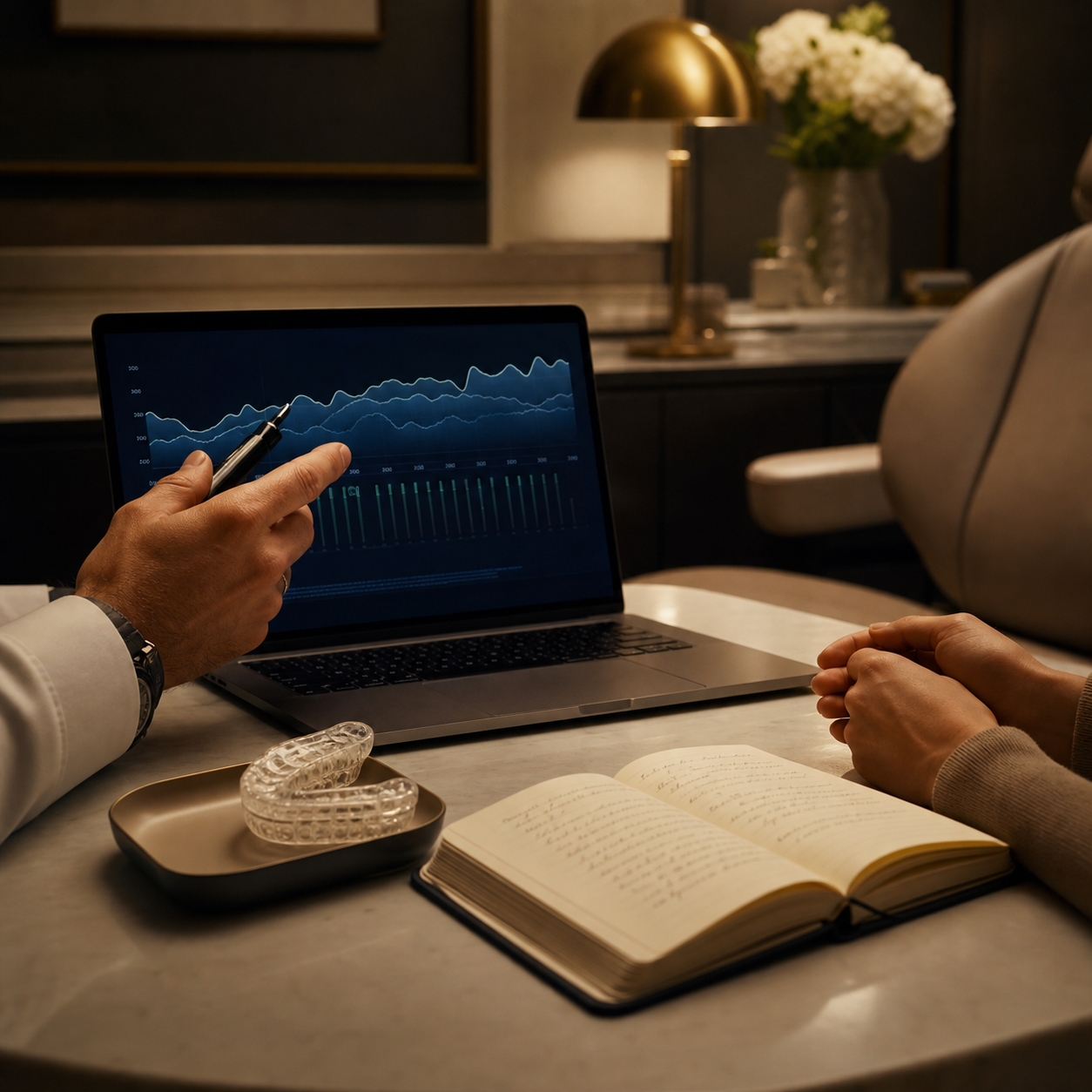
For some adults with diagnosed obstructive sleep apnea, oral appliance therapy may be a suitable treatment option.
An oral appliance may be considered in circumstances where a patient cannot tolerate CPAP, prefers an alternative when clinically appropriate, or has discussed oral appliance therapy with the clinician responsible for managing their sleep disorder.
CPAP remains an important and highly established treatment for obstructive sleep apnea. Patients using CPAP should not simply stop using it because they would prefer a dental appliance. Changes to treatment should be discussed with the appropriate treating clinician.
Determining whether oral appliance therapy is appropriate may involve considering:
- Your sleep-study results
- The type and severity of sleep apnea
- Your symptoms
- Relevant medical history
- Previous treatment
- Your experience with CPAP, where applicable
- The condition of your teeth
- Gum and periodontal health
- Your bite
- Jaw-joint health
- Your ability to tolerate mandibular advancement
- Your ability to attend follow-up appointments
- Your lifestyle and personal preferences
The American Academy of Sleep Medicine and American Academy of Dental Sleep Medicine clinical guideline supports custom, titratable oral appliances for appropriate adult patients under professional care.
The key word is appropriate. There is no single sleep-apnea treatment that is automatically right for every patient.
What Happens at a Sleep Apnea Dental Consultation in Dubai?
A consultation should help you understand your options rather than simply ending with someone telling you that you need an appliance.
Dr. Amini’s dental sleep medicine assessment in Dubai may include discussion of symptoms and history such as:
- Snoring
- Breathing pauses during sleep
- Gasping or choking
- Daytime tiredness
- Morning headaches
- Whether you wake feeling refreshed
- Previous sleep studies
- Previous or current CPAP treatment
- Existing oral appliances
- Jaw pain or clicking
- Grinding or clenching
- Relevant dental treatment
- Medical history and medication
If you already have a sleep-study report, CPAP report, sleep physician’s assessment or other relevant medical information, bringing this information to the consultation may help place the dental assessment within your wider treatment pathway.
Your mouth can then be assessed for factors that influence whether oral appliance therapy may be appropriate. These include your teeth, gums, existing dental work, bite, jaw joints, muscles and oral anatomy.
By the end of the assessment, the objective should be for you to understand:
- Whether oral appliance therapy appears potentially suitable
- Whether further medical or sleep assessment is required
- Whether dental treatment is required first
- The potential benefits of oral appliance therapy
- Its limitations
- Possible side effects
- What alternative treatments may exist
- How the appliance would be fitted and adjusted
- How follow-up would work
- How treatment effectiveness may subsequently be assessed
This multidisciplinary approach is important because dental sleep medicine works most effectively when dental findings are considered alongside the patient’s medical sleep diagnosis.
Benefits, Side Effects and Follow-Up

Some patients find mandibular advancement appliances easier to incorporate into everyday life than CPAP. They are compact and portable, require no mask or powered machine during use, and may therefore be particularly convenient for people who travel frequently.
For Dubai residents who regularly travel internationally for work or leisure, portability can be a practical consideration. However, convenience should never be the only reason for selecting a treatment. The treatment still needs to be clinically appropriate and effective.
Oral appliances can also cause side effects. These may include:
- Temporary jaw soreness
- Muscle discomfort
- Tooth tenderness
- Increased salivation
- Dry mouth
- Changes in the way the teeth meet
- Gradual movement of teeth
- Jaw-joint symptoms
- The need for adjustment or repair
- Eventual replacement of the appliance
This is why a custom appliance should not simply be fitted and then forgotten. Ongoing dental review allows changes in the teeth, bite, appliance and jaw joints to be identified.
Feeling better or being told that you are snoring less can certainly be encouraging. However, improvement in symptoms does not necessarily prove that obstructive sleep apnea has been adequately controlled.
Depending on your diagnosis and treatment pathway, your sleep physician or treating clinician may recommend repeat objective testing to determine how effectively oral appliance therapy is controlling breathing disturbances during sleep.
Sleep Apnea, Daytime Sleepiness and Driving in Dubai
Excessive daytime sleepiness deserves particular attention if you drive regularly.
Dubai’s Roads and Transport Authority (RTA) warns motorists about drowsy driving and advises drivers not to continue driving when they are fatigued or sleepy.
Sleep apnea is also specifically addressed in RTA medical-fitness documentation. The RTA Fitness to Drive medical declaration asks about sleep apnea syndrome and other conditions causing excessive daytime sleepiness, including whether the condition is successfully controlled.
The practical message is straightforward: if you are struggling to remain alert, do not drive until it is safe to do so and seek appropriate medical advice.
If sleep apnea or another sleep disorder is causing excessive daytime sleepiness, assessment and effective treatment are important not only for sleep quality but also for personal and road safety. If you have questions about how a diagnosed medical condition could affect your individual driving requirements, discuss this with the appropriate doctor and consult current RTA guidance rather than relying on general information online.
Questions Patients Often Ask
Can a dentist diagnose sleep apnea?
A dentist trained in dental sleep medicine can screen for potential signs and symptoms, identify relevant dental or craniofacial factors, and assess whether your mouth may be suitable for oral appliance therapy. A diagnosis of obstructive sleep apnea should be based on appropriate medical sleep evaluation and objective testing rather than a dental examination alone.
Does snoring always mean that I have sleep apnea?
No. Many people snore without having obstructive sleep apnea. However, loud or persistent snoring combined with breathing pauses, choking, gasping, morning headaches, significant tiredness or poor-quality sleep deserves further investigation.
Is a sleep apnea appliance the same as a night guard?
No. A conventional night guard is generally intended to protect the teeth from grinding or clenching. A mandibular advancement appliance is specifically designed to hold the lower jaw in a more forward position during sleep and may be prescribed for selected patients with snoring or obstructive sleep apnea.
Will an oral appliance work for everyone?
No treatment works for every patient. Suitability depends on your sleep diagnosis, anatomy, symptoms, medical history, teeth, gums, bite and jaw joints. Appropriate assessment is therefore necessary before an appliance is prescribed.
How do I know whether the appliance is working?
Your symptoms, comfort, jaw health, bite and appliance condition should be monitored during follow-up. Symptom improvement alone may not provide the complete answer, so where clinically indicated, repeat sleep testing can help determine whether treatment is controlling sleep-disordered breathing effectively.
Why Specialist Dental Sleep Medicine Experience Matters
Dental sleep medicine sits at the intersection of dentistry and sleep medicine. Providing an appliance involves considerably more than simply taking an impression of the teeth.
The dentist needs to understand appliance design, mandibular positioning, bite relationships, temporomandibular joint considerations, dental stability, side-effect management, adjustment and long-term monitoring.
Dr. Sara Amini has completed the American Academy of Dental Sleep Medicine Mastery Program and is a Diplomate of the American Board of Dental Sleep Medicine as well as an International Certificant. Her Dubai practice is located in Dubai Healthcare City.
For patients looking specifically for a sleep apnea dentist in Dubai, formal dental sleep medicine education and assessment are relevant because oral appliance therapy should be delivered within a structured clinical pathway rather than being treated as an incidental extension of general dentistry.
Read more about Dr. Sara Amini in Dubai and her professional background.
Patient Experiences and Further Reading
People considering sleep-apnea treatment often search online communities to understand what it is like to undergo a sleep study, use CPAP, wear a mandibular advancement appliance or live with snoring.
Patient discussions on Reddit can be useful for understanding common questions and experiences. For example, see this Reddit discussion about being advised to see a dentist for snoring.
Reddit posts are personal experiences, not medical advice. Someone else’s experience cannot establish whether you have sleep apnea, determine the severity of the condition or identify which treatment is suitable for you.
For general background only, you may also review Sleep apnea on Wikipedia. For clinical decisions, rely on qualified healthcare professionals and authoritative medical guidance.
Arrange a Sleep Apnea Consultation in Dubai
If you are concerned about persistent snoring, have already been diagnosed with obstructive sleep apnea, have difficulty tolerating CPAP, or have been advised to consider oral appliance therapy, a dental sleep medicine assessment can help determine whether a custom mandibular advancement appliance may be suitable.
Dr. Sara Amini provides dental sleep medicine consultations from her clinic in Dubai Healthcare City, Dubai, UAE. The dental assessment can evaluate your teeth, gums, bite, jaw joints and oral anatomy while considering your existing sleep diagnosis and treatment plan.
To discuss your options, contact Dr. Sara Amini in Dubai.
Medical Information Notice
This article is provided for general information only. It does not diagnose obstructive sleep apnea, replace a sleep study or medical consultation, or guarantee that oral appliance therapy will be appropriate or effective for any individual patient. Diagnosis and treatment should be based on appropriate sleep assessment, relevant medical history, objective testing where indicated, oral and dental examination, and a personalized treatment plan.
Related Dr. Sara Amini UAE Pages
